Stuck valve — symptoms, diagnosis and prevention
Moving element cannot travel through the required range.
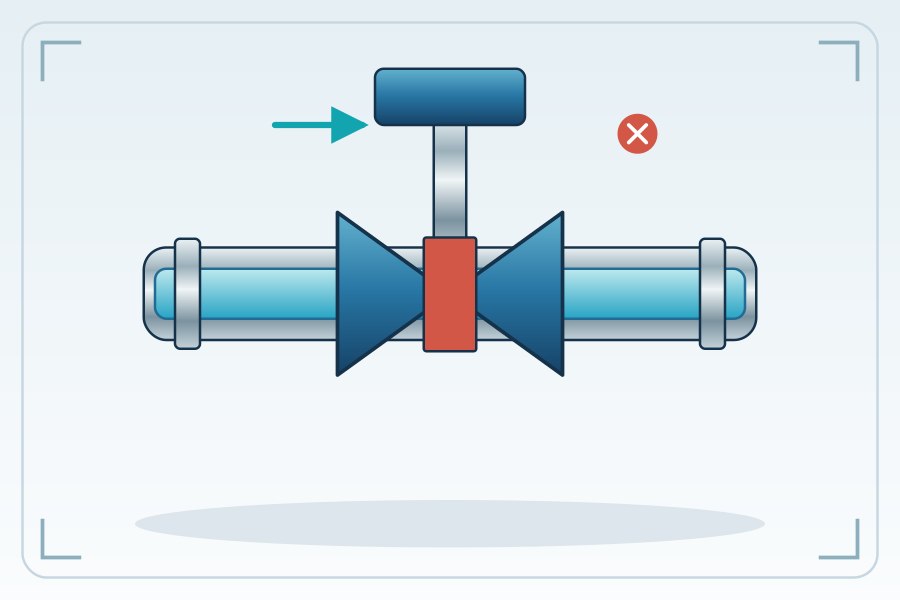
What it is and how it occurs
Moving element cannot travel through the required range.
Typical symptoms and indications
Position-command mismatch, improper flow, high torque.
How to investigate and differentiate
Check indication, actuator, deposits and authorized safe testing.
Prevention and interventions to assess
Review environment, cleanliness, compatibility and inspection strategy.
How to use in an investigation
Record the observed symptom, operating conditions and affected component. Add this record as a hypothesis; document supporting and opposing evidence and a test that distinguishes it from alternatives. Propose definitive actions only after validating the causal link.
Related equipment
Positive displacement pumpGears, valves, seal, drive→Air handling unitFan, filters, coils, dampers→Hydraulic systemPump, reservoir, filter, valve, actuator→Pneumatic systemAir treatment, valves, cylinders, hoses→Control valveBody, plug, seat, actuator, positioner→
Other mechanisms for comparison
CavitationVapor forms at low local pressure and collapses in higher-pressure regions.→Fluid aerationAir enters or remains dispersed in a liquid, changing compressibility and flow.→External leakageFluid crosses a boundary intended to contain it.→Internal leakageFluid passes between chambers or circuits, reducing performance without necessarily external loss.→
Supporting references
- ISO 14224:2016 — Reliability and maintenance data (oil, gas and petrochemical scope)
- ISO 17359:2018 — Condition monitoring and diagnostics of machines
Educational support. Actual investigations require evidence, risk assessment, applicable criteria and validation by responsible professionals. References do not imply standards compliance.
Turn knowledge into investigation
Use the methods in the software, organize evidence and export a report. Free, no sign-up.