Cavitation — symptoms, diagnosis and prevention
Vapor forms at low local pressure and collapses in higher-pressure regions.
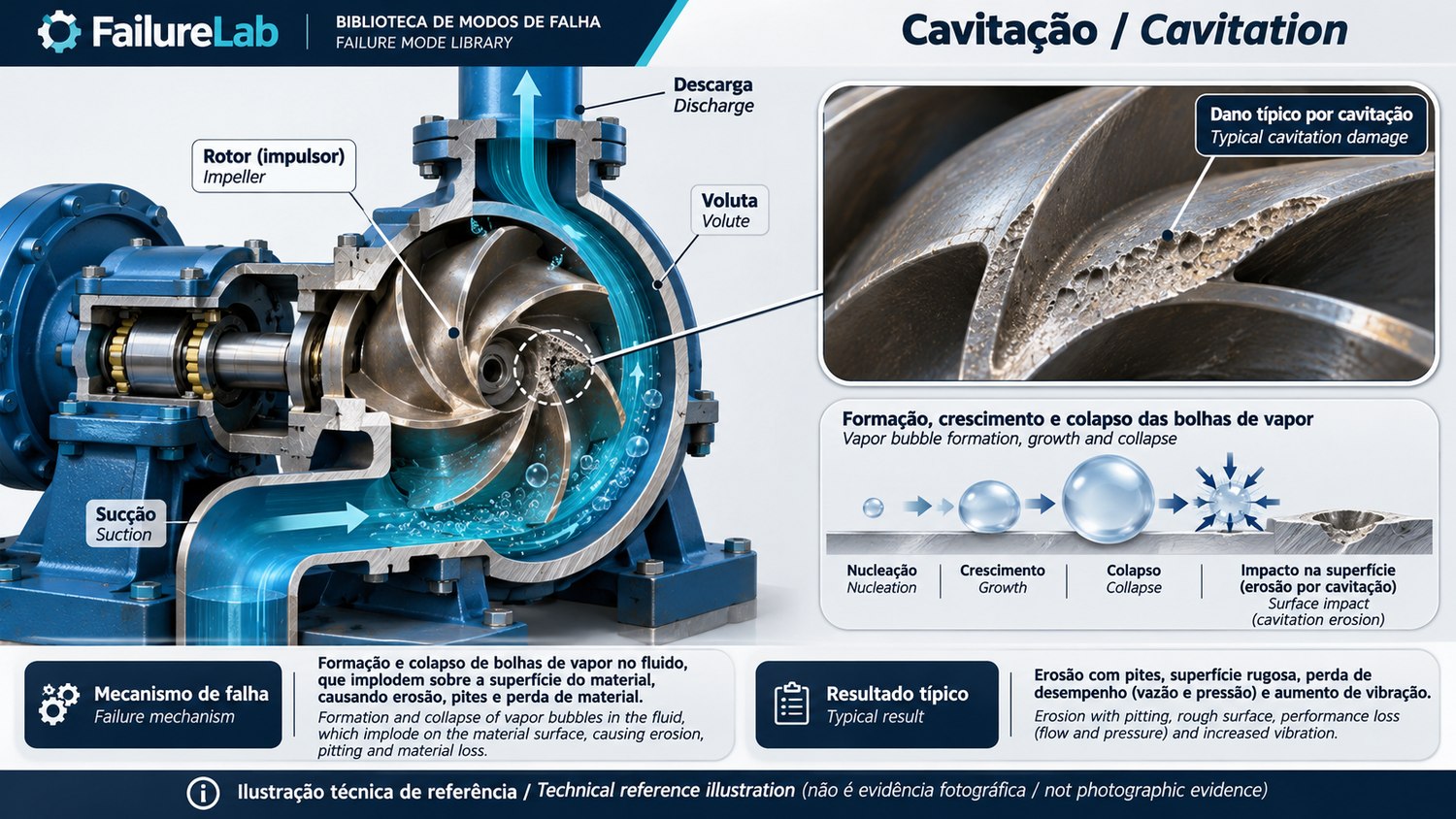
What it is and how it occurs
Vapor forms at low local pressure and collapses in higher-pressure regions.
Typical symptoms and indications
Noise, vibration, localized erosion, possible head loss.
How to investigate and differentiate
Check absolute suction pressure, temperature, available/required NPSH and OEM curve; distinguish aeration.
Prevention and interventions to assess
Investigate suction losses and operating conditions without exceeding safety limits.
How to use in an investigation
Record the observed symptom, operating conditions and affected component. Add this record as a hypothesis; document supporting and opposing evidence and a test that distinguishes it from alternatives. Propose definitive actions only after validating the causal link.
Related equipment
Other mechanisms for comparison
Supporting references
- ISO 17359:2018 — Condition monitoring and diagnostics of machines
- KSB Centrifugal Pump Lexicon — Cavitation
Turn knowledge into investigation
Use the methods in the software, organize evidence and export a report. Free, no sign-up.