Fretting wear — symptoms, diagnosis and prevention
Small oscillatory interface displacements cause wear and oxidation.
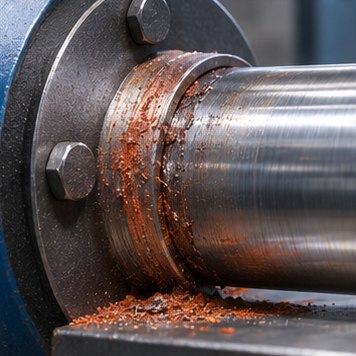
What it is and how it occurs
Small oscillatory interface displacements cause wear and oxidation.
Typical symptoms and indications
Red or dark debris, marks at fits and interfaces.
How to investigate and differentiate
Examine fit, load, vibration and relative motion.
Prevention and interventions to assess
Review fit, stiffness and surface protection.
How to use in an investigation
Record the observed symptom, operating conditions and affected component. Add this record as a hypothesis; document supporting and opposing evidence and a test that distinguishes it from alternatives. Propose definitive actions only after validating the causal link.
Related equipment
Coupling and shaftHubs, flexible element, key, shaft→Rolling bearingRaceways, rolling elements, cage, lubrication→
Other mechanisms for comparison
Abrasive wearHard particles or asperities remove material from a contacting surface.→Adhesive wearLocal junctions between sliding surfaces break and transfer material.→Rolling contact fatigueRepeated contact stresses initiate cracks that may produce spalling.→False brinellingMicromovements at stationary contacts wear surfaces and form depressions.→
Supporting references
- ISO 17359:2018 — Condition monitoring and diagnostics of machines
- ISO 15243:2017 — Rolling bearings: damage and failures
Educational support. Actual investigations require evidence, risk assessment, applicable criteria and validation by responsible professionals. References do not imply standards compliance.
Turn knowledge into investigation
Use the methods in the software, organize evidence and export a report. Free, no sign-up.