Failures in Rolling bearing
Components, related failure modes and investigation paths for Rolling bearing.
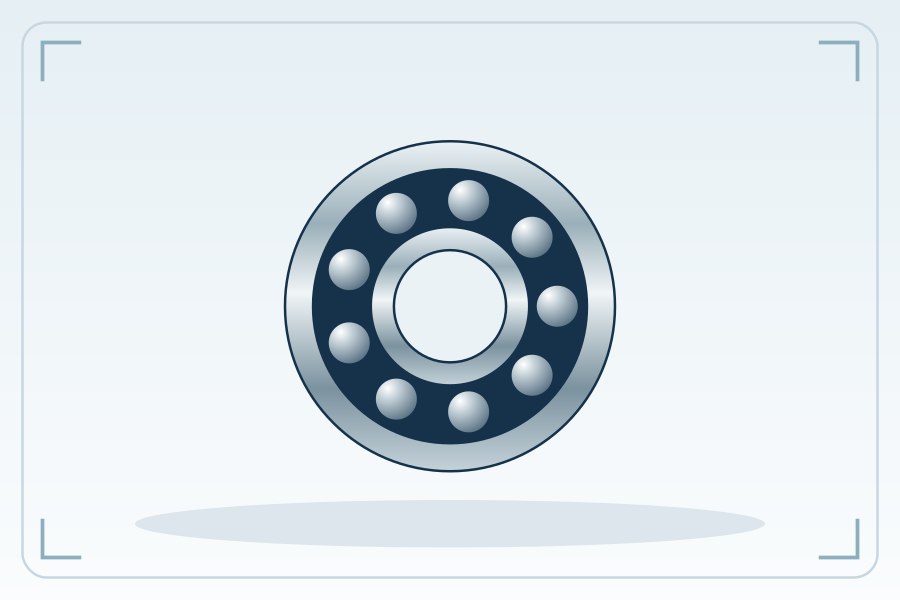
Components and investigation boundary
Raceways, rolling elements, cage, lubrication
How to start the investigation
Define required function, capacity, normal conditions, identification, load and intervention history. Compare observed with expected performance and record each source. The list below helps form hypotheses; it neither limits the investigation nor indicates failure frequency.
Modes, mechanisms and conditions to investigate
Abrasive wearDirectional grooves, debris and dimensional change.→Adhesive wearSmearing, transferred material and polished or torn regions.→Rolling contact fatiguePits, spalling and vibration at component-related frequencies.→False brinellingRegularly spaced marks, possible oxidized debris.→Insufficient lubricationTemperature, wear, noise and lubricant changes.→OverlubricationHeating after regreasing, excessive purge, leakage.→Fretting wearRed or dark debris, marks at fits and interfaces.→Bearing seizureBlocked rotation, heating, smearing and possible trip.→Electrical erosion in bearingCraters, fluting pattern or darkened lubricant.→
Educational support. Actual investigations require evidence, risk assessment, applicable criteria and validation by responsible professionals. References do not imply standards compliance.
Turn knowledge into investigation
Use the methods in the software, organize evidence and export a report. Free, no sign-up.