Evaporator icing — symptoms, diagnosis and prevention
Surface temperature and moisture allow ice formation.
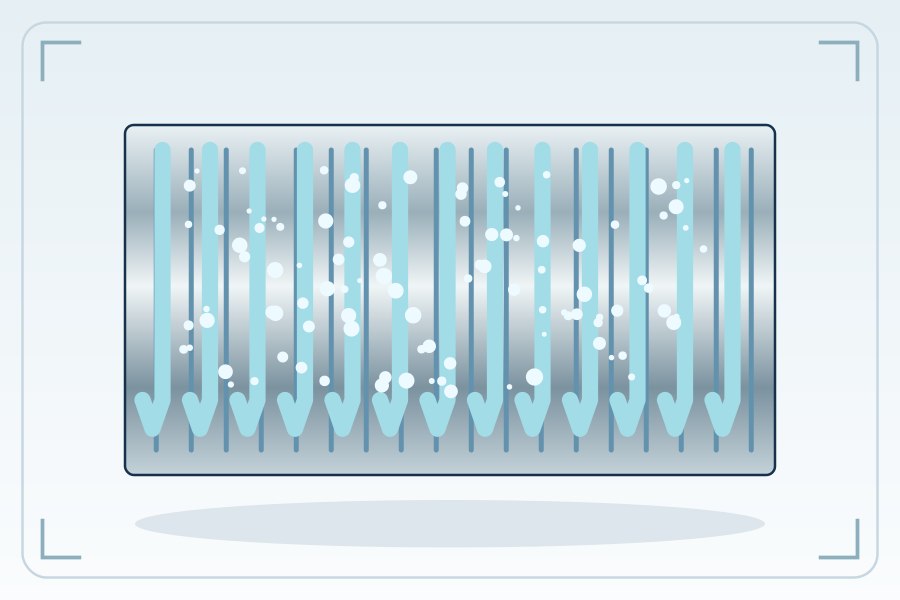
What it is and how it occurs
Surface temperature and moisture allow ice formation.
Typical symptoms and indications
Visible ice, reduced flow and unstable capacity.
How to investigate and differentiate
Assess flow, sensor, control, load and defrost sequence.
Prevention and interventions to assess
Review heat transfer conditions, sensors and controls.
How to use in an investigation
Record the observed symptom, operating conditions and affected component. Add this record as a hypothesis; document supporting and opposing evidence and a test that distinguishes it from alternatives. Propose definitive actions only after validating the causal link.
Related equipment
Other mechanisms for comparison
Heat exchanger foulingDeposits increase thermal or hydraulic resistance.→Refrigerant leakageThe circuit loses inventory through a non-tight boundary.→Liquid refrigerant floodbackLiquid refrigerant reaches suction under conditions unsuitable for the compressor.→Insufficient airflowDelivered airflow does not meet thermal or ventilation function.→
Supporting references
- ISO 17359:2018 — Condition monitoring and diagnostics of machines
Educational support. Actual investigations require evidence, risk assessment, applicable criteria and validation by responsible professionals. References do not imply standards compliance.
Turn knowledge into investigation
Use the methods in the software, organize evidence and export a report. Free, no sign-up.