High contact resistance — symptoms, diagnosis and prevention
A degraded electrical interface dissipates extra heat under current.
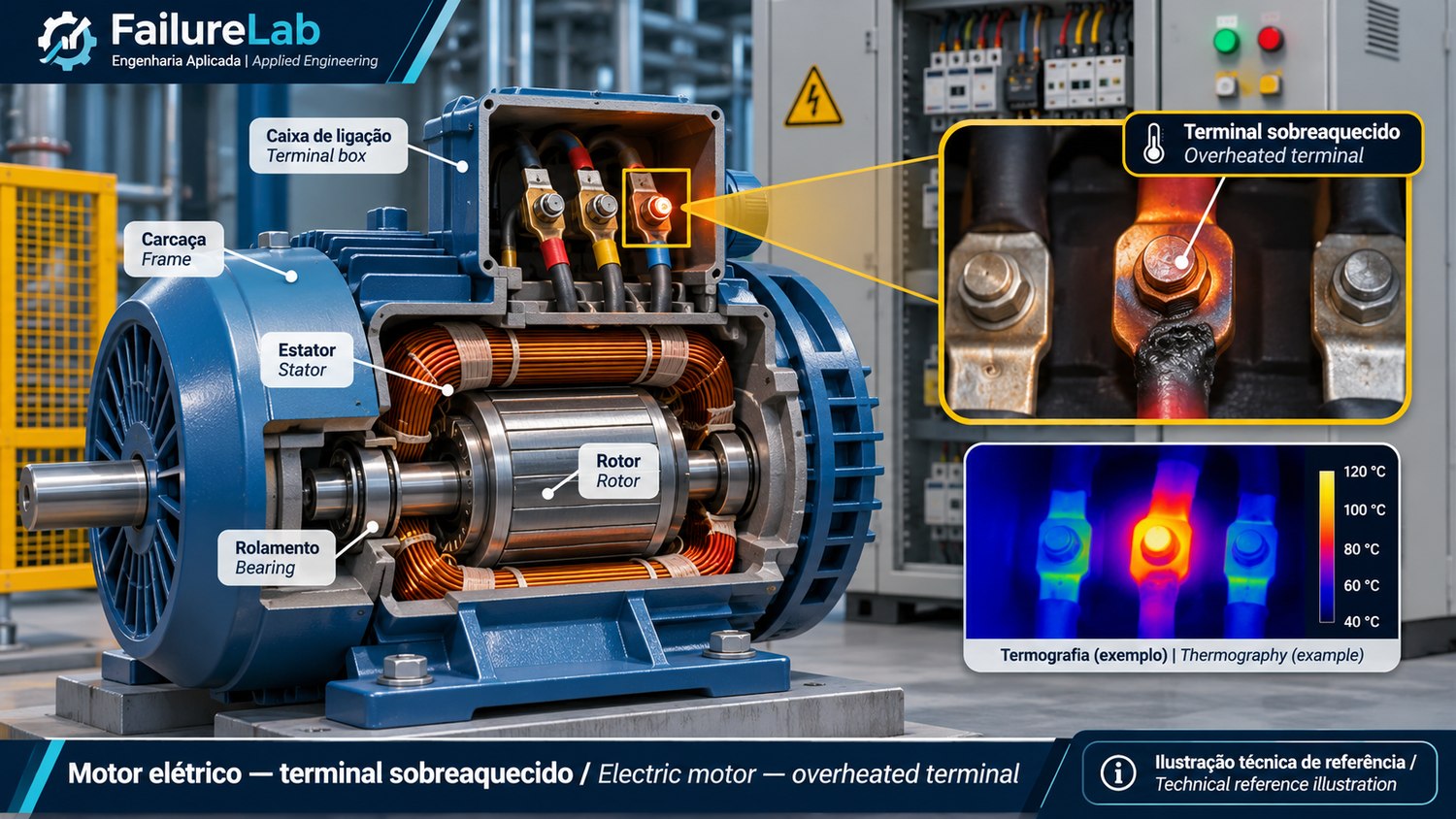
What it is and how it occurs
A degraded electrical interface dissipates extra heat under current.
Typical symptoms and indications
Localized hot spot, discoloration and voltage drop.
How to investigate and differentiate
Comparative thermography and qualified testing; assess current and joint condition.
Prevention and interventions to assess
Control assembly, materials and inspections per OEM.
How to use in an investigation
Record the observed symptom, operating conditions and affected component. Add this record as a hypothesis; document supporting and opposing evidence and a test that distinguishes it from alternatives. Propose definitive actions only after validating the causal link.
Related equipment
Electric motorStator, rotor, bearings, terminals→Air compressorCompression element, separator, cooler, filters→SwitchboardBusbars, joints, protection, insulation→Variable frequency drivePower stage, ventilation, controls, motor→UPS and batteriesBattery, rectifier, inverter, ventilation→
Other mechanisms for comparison
Insulation degradationThermal aging, moisture, contamination or electrical stress reduce dielectric properties.→Open circuitA connection or conductor loses electrical continuity.→Short circuitAn unintended low-impedance path connects different potentials.→Electrical overloadCurrent or power exceeds capacity applicable to the operating duty.→
Supporting references
- ISO 17359:2018 — Condition monitoring and diagnostics of machines
Educational support. Actual investigations require evidence, risk assessment, applicable criteria and validation by responsible professionals. References do not imply standards compliance.
Turn knowledge into investigation
Use the methods in the software, organize evidence and export a report. Free, no sign-up.